The Man Who Performed the Labors: Franklin Roosevelt and the Herculean Burden of American Civilization

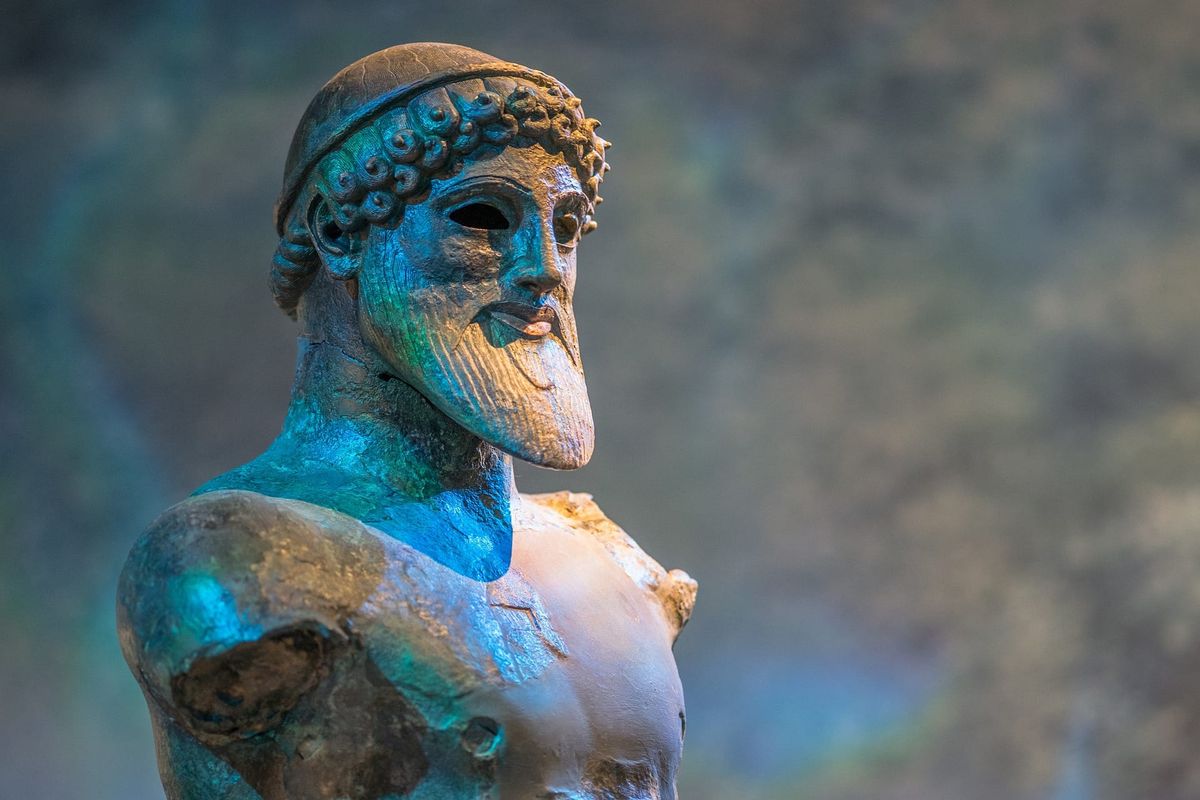
Heracles, or Hercules, as I will refer to him through this essay, does not volunteer for the labors. This is the detail that tends to get lost when the myth is invoked casually, when someone reaches for the image of the hero and his twelve tasks as a shorthand for impressive achievement, and it is the detail that matters most for understanding what the myth is actually about. The labors are imposed upon him, by Hera's enmity and by the oracle at Delphi and by a king, Eurystheus, who assigns them specifically because he expects Hercules to fail at each one and is consistently surprised when he does not. The heroism is in the doing, in the accumulated endurance of tasks that would each individually destroy an ordinary man, undertaken consecutively without the possibility of rest or refusal, performed under conditions of divine hostility that made the doing harder than the tasks themselves required. The myth is about what a particular kind of character looks like when circumstances demand everything it has, repeatedly, without relief, across a span of time long enough to constitute a life.
Franklin Roosevelt performed the labors of American civilization across twelve years of the presidency, from March of 1933 to April of 1945, and he performed them from a wheelchair, which is itself a detail so precisely Herculean in its quality that the myth might have been designed to anticipate it. The paralysis that poliomyelitis left him with in 1921 did not end his political career, as it would have ended the career of a man constituted differently, because the particular quality that defined him was a form of will that operated at some level beneath or beyond the body's limitations, that drew on reserves not obviously connected to physical capacity, and that presented to the world around it a face of confident forward motion that bore only a partial and carefully managed relationship to what the effort was actually costing. He governed the most powerful nation on earth through the Depression and the Second World War while being lifted in and out of cars, while being carried up staircases, while conducting the diplomacy of the most consequential international relationships in modern history from a seated position that the press, by collective and unspoken agreement, declined to photograph. The performance of physical vitality was sustained across twelve years with a consistency that required a form of discipline that does not announce itself and that has not received, in the historical literature, quite the attention it deserves.
To understand what Roosevelt brought to the labors, one must begin with the formation, and the formation is, in his case, one of the more interesting in American political history precisely because it seems, on the surface, so unpromising. He was born in 1882 at Springwood, the Hyde Park estate in the Hudson Valley, into a family of inherited wealth and social position that was, by any reasonable measure, among the most comfortable in the republic. His father James was a country gentleman of the old school, fifty-three years old when Franklin was born, gentle in manner and conservative in temperament, who presided over the Hyde Park property with a patrician ease that suggested no acquaintance whatsoever with the kinds of difficulty that would eventually define his son's presidency. His mother Sara was a more formidable figure, possessed of a certainty about her son's exceptional quality that occasionally shaded into something controlling, and who maintained a presence in his life and his household that Eleanor Roosevelt found, with considerable justification, oppressive. The childhood was gilded in every material sense, and nothing about it obviously predicts the man who would tell a frightened nation in the depths of the Depression that the only thing it had to fear was fear itself.
What the formation did produce, and what tends to be underappreciated in accounts that emphasize the patrician surface, was a particular relationship to responsibility. The Hyde Park estate was not simply a property; it was a community, with tenant farmers and servants and a set of obligations toward the people who depended on the family's stewardship that Roosevelt absorbed as naturally as he absorbed everything else about the life he was born into. This is not a romantic idealization of the paternalistic tradition he came from; that tradition had serious limitations, and Roosevelt himself sometimes operated within them in ways that the history of his presidency makes clear. It produced in him a genuine sense that the people at the top of the social order owed something to the people below it, a conviction rooted in the actual experience of living with and among the people toward whom the obligation ran rather than in any theoretical liberalism. Groton reinforced this, in its Anglican Social Gospel way. The polio deepened it further, stripping away whatever remained of the insulating comfort of his class position and forcing him into a sustained encounter with physical vulnerability and dependence that his closest observers consistently noted had changed him in ways they found difficult to articulate precisely.
He entered politics in 1910, winning a seat in the New York State Senate from a district that had not sent a Democrat to Albany in decades. He supported Woodrow Wilson's candidacy for the presidency in 1912, was rewarded with the position of Assistant Secretary of the Navy, and served in that role through the Wilson years with a competence that built the administrative experience and the Washington relationships that would eventually matter enormously. He watched the League fight from a position close enough to understand exactly what Wilson's rigidity had cost, and the lesson registered. He was the Democratic vice-presidential nominee in 1920, lost with James Cox in the Republican landslide that followed the war's exhaustion, and then was struck by polio in the summer of 1921 at the age of thirty-nine.
The seven years between the polio and the 1928 gubernatorial campaign in New York are the years that most directly produced the Roosevelt who performed the labors, and they deserve more attention than political biography usually gives them. He spent those years in sustained and frequently painful physical rehabilitation at Warm Springs in Georgia, working with a determination that his doctors found remarkable and that produced, in the end, a relationship with his own limitations that had the quality of a negotiated settlement. He learned to appear to walk, with braces and a strong arm to lean on and a grip on a podium or a railing, and the performance of walking was sustained throughout his public life with a care and a precision that required constant effort. The effort was invisible by design, and that invisibility is itself one of the more remarkable things about him.
He won the New York governorship in 1928, served two terms, and was elected president in November of 1932 against a Herbert Hoover who had presided over the early years of the Depression with an ideological inflexibility that had by that point exhausted the patience of an electorate that had lost, in many cases, nearly everything. The scale of what Roosevelt inherited on March 4th, 1933 is worth pausing on, because it can be abstracted into statistics in ways that obscure the actual human condition those statistics represented. Twenty-five percent unemployment. Banks closing across the country at a rate that threatened to make the financial system simply stop functioning. A political culture in which serious people were seriously discussing whether American democracy was capable of managing the crisis at all, whether the moment had simply outrun the republic's capacity to respond to it. Roosevelt arrived in Washington having promised, vaguely and with considerable political dexterity, to try something, to experiment, to move, at a moment when movement itself was what the country most desperately needed and most completely lacked.
The First Hundred Days that followed are among the more extraordinary episodes in the history of American governance. He did not arrive with a coherent program. The New Deal was a series of experiments conducted simultaneously by a governing intelligence that understood, with a clarity that subsequent commentators have sometimes missed, that the country's need was as much psychological as economic. It needed to believe that its government was acting, that the paralysis of the Hoover years had been replaced by motion, that someone in authority had concluded that the existing arrangements could be changed. The specific content of the experiments mattered less than the fact of the experimenting, and Roosevelt understood this in a way that more ideologically committed advisers sometimes found infuriating.
The Banking Holiday of March 1933, declared four days after the inauguration, illustrates this quality most clearly. Roosevelt closed the banks by executive order, an act of governmental authority so sweeping that it would have been unimaginable a month earlier; he then used the radio, with a conversational directness and warmth that the medium had not previously been used to convey, to explain to the American people what he had done and why, and to ask them to trust that when the banks reopened they would be sound. They trusted. The banks reopened. The thing that had seemed about to bring the financial system down was addressed through executive action and the kind of personal communication between a president and a citizenry that the radio made possible for the first time. Roosevelt understood the new medium instinctively, in the way that a man who has spent years managing the presentation of himself to a public that must not see his disability understands the relationship between performance and reality, and his Fireside Chats became one of the defining features of the New Deal's achievement.
The labors accumulated. The Emergency Banking Act, the Agricultural Adjustment Act, the National Industrial Recovery Act, the Social Security Act, the National Labor Relations Act: these were responses to specific problems as they presented themselves, improvised with the materials available, and they contradicted one another in ways that Roosevelt was largely unbothered by, because consistency was not what the moment required. The Brain Trust of academic advisers who surrounded him contained people of sharply incompatible economic views, and Roosevelt used them all, took from each what seemed useful at a given moment, and declined to be troubled by the theoretical incompatibilities because he was not, at bottom, a theoretical man. The New Deal was what his practical intelligence produced when given the authority to act and the crisis that made acting necessary.
The Herculean parallel requires honest examination of its complications here, because Hercules is not a morally simple figure and the parallel does genuine work only if it is allowed to illuminate rather than simply to flatter. Roosevelt's record contains failures that honest accounting must engage directly, and the most serious of them is the one that the series as a whole has consistently refused to bracket as a footnote.
He failed Black Americans with a consistency and a thoroughness that was, given the scale of his political achievement in other domains, a genuine moral failure. He refused to support federal anti-lynching legislation, repeatedly and explicitly, because he needed the votes of Southern Democratic senators to pass his economic program, and the people who bore the cost of that calculation were Black Americans who continued to be murdered with impunity while the president of the United States declined to use his authority on their behalf. The New Deal programs themselves were administered in ways that systematically disadvantaged Black workers; the Agricultural Adjustment Act's crop reduction payments went to landowners rather than sharecroppers, dispossessing hundreds of thousands of Black farming families; the National Recovery Administration's wage codes frequently excluded the occupations in which Black workers were most concentrated. Eleanor Roosevelt's genuine commitment to racial equality, and her consistent advocacy within the administration for policies that would benefit Black Americans, stands in illuminating contrast to her husband's more calculating approach.
The Japanese American internment of 1942 is the other episode that honest engagement with Roosevelt's record cannot elide. He signed Executive Order 9066 in February of 1942, authorizing the forced relocation of approximately 120,000 people of Japanese ancestry, the majority of them American citizens, from their homes on the West Coast to internment camps in the interior. The Supreme Court upheld it in Korematsu v. United States in 1944, a decision the Court effectively repudiated seventy years later, but the constitutional validation did not constitute a moral one, and the people who spent years in those camps were owed from their government something that they did not receive.
These are part of the story of who Roosevelt was and what the New Deal actually was, and the Herculean parallel is useful precisely because it does not require one to pretend otherwise. Hercules commits acts in the course of his labors that are not easily justified, and the tradition does not sanitize them; his greatness coexists with his failures in ways that the myth refuses to resolve into a simple verdict. Roosevelt's greatness coexists with his failures in exactly this way.
The war, when it came, was a governing challenge of a more total kind than the Depression had been. It required him to mobilize the entire productive capacity of a continental economy for a military effort of unprecedented scale, to manage alliances with partners whose interests were not identical to America's, and to do all of this while simultaneously planning the postwar order that would determine whether the sacrifices of the war produced a world worth having.
The relationship with Churchill is the one that has received the most historical attention, and it deserves the attention because it was genuinely consequential and genuinely complicated. Churchill held a particular vision of the British Empire's place in the postwar world, and the management of the alliance required a combination of personal warmth and strategic calculation that Roosevelt navigated with a skill that Churchill, who was himself not lacking in political intelligence, consistently found impressive and occasionally found frustrating. Roosevelt understood, with a clarity that Churchill sometimes resisted, that the war was going to produce a world in which the British Empire could not be maintained in anything like its prewar form, and he acted on that understanding in ways that Churchill experienced as betrayal and that history has largely vindicated as realism.
The relationship with Stalin was more troubling. Roosevelt's belief that he could manage Stalin through personal diplomacy, that the relationships he was building at Tehran and Yalta would provide the foundation for postwar cooperation between the great powers, has been criticized from the moment the postwar settlement became clear, and the criticism has considerable force. The concessions made at Yalta produced consequences that Roosevelt either did not foresee or chose to accept as the price of the larger settlement he was trying to construct. Whether a harder line would have produced better outcomes is a question the historical literature has not settled, and the essay should resist the temptation to resolve it with more confidence than the evidence supports.
Roosevelt arrived at Yalta in February of 1945 as a man who was visibly dying, his physical deterioration having accelerated dramatically in the preceding months in ways that his advisers could see clearly and that he himself may have understood more fully than he acknowledged. He had been performing the labors for twelve years, and the body that had been carrying the performance was running out of the reserves that the performance required. He came back from Yalta and addressed Congress from a seated position rather than standing at the podium, the first time he had done so publicly, and the accounts of those who saw him in those final weeks describe a man whose famous vitality had given way to something that looked more like exhaustion than like the restrained effort that had always underlain it.
He died at Warm Springs on April 12th, 1945, of a cerebral hemorrhage, while sitting for a portrait. Germany surrendered twenty-three days later. The San Francisco Conference that established the United Nations opened eighteen days after his death. He did not quite reach Ithaca; he died with the war not yet over and the postwar order not yet established, at the moment when both were close enough that the remaining distance must have been visible to him in the clearer moments of those final weeks.
The mourning that followed his death was spontaneous and of a kind that the republic had not seen before and has not seen since. Accounts of the news reaching people across the country describe something closer to personal grief than to the political respect that the death of a head of state ordinarily generates, and this reaction was telling something true about what Roosevelt had meant to the people who had lived through the Depression and the war with him as their president. He had been present to them through the radio and through the accumulated intimacy of twelve years of Fireside Chats in a way that presidents are not ordinarily present, and the grief was the appropriate response to the loss of something genuinely irreplaceable. This is what Hercules's apotheosis represents in the mythological tradition: the recognition, after the fact, that the figure who performed the labors was of a different order from the figures who watched them performed.
His place in the national imagination has remained, across the eight decades since his death, among the more stable features of American political mythology. His racial record is real and its costs were borne by real people, as the preceding pages make clear; the scale of what he preserved and built has simply not yet been displaced in the public understanding by the reckoning his failures require. Whether that balance holds as the reckoning deepens is a question the essay cannot answer, because it is genuinely open.
He performed the labors. They were assigned by circumstances more pitiless than any Eurystheus, and he carried them because they needed to be carried, and because he was, by some combination of formation and will and the specific quality of political intelligence that the classical tradition calls heroic, the man the republic had produced for exactly this purpose. The eagle does not come for Hercules every day as it comes for Prometheus; the labors end, and the apotheosis follows, and the myth resolves into something that feels, despite everything it cost, like completion. Roosevelt's story resolves in something like the same way, the death at Warm Springs carrying the quality of a completed arc, the man who had been given the labors arriving, finally, at the rest that twelve years of performance had earned. The world he left behind contained failures and injustices that his own choices had contributed to, and it was nevertheless a world that his twelve years of labor had made considerably less terrible than it would otherwise have been. That is the Herculean achievement, stated plainly. It is enough.