The Fire Bringer Left on the Rock: Woodrow Wilson and the Promethean Tragedy of American Internationalism


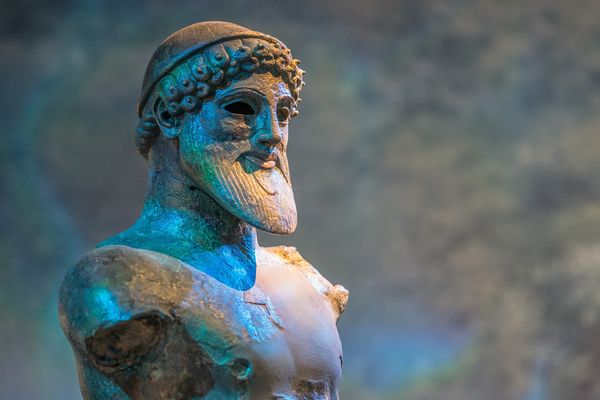
The aspect of the Prometheus myth that tends to receive the least attention in casual reference to it is also the aspect that matters most. We remember Prometheus as the rebel, the martyr, the figure chained to the rock while the eagle comes each day to devour his liver, and we remember this because suffering of that particular theatrical quality lodges itself in the memory without much effort. What we tend not to dwell on is the prior moment: the moment of decision. Prometheus is not a man surprised by consequences. He knows, before he acts, what Zeus will do to him. The fire he gives to humanity is given with full knowledge of the cost, after what we must imagine was genuine deliberation, by a figure who has concluded that the world in which humanity continues without fire is less tolerable than the world in which he himself suffers the punishment for changing that condition. It is a considered moral choice made under conditions of perfect foreknowledge, which is, if one sits with it long enough, one of the more extraordinary things any figure in classical literature does.
Aeschylus understood this, and his Prometheus Bound is the text that most fully realizes the implications of it. The Prometheus of Aeschylus does not weep on the rock. He argues. He insists, from his position of total physical helplessness, that what he did was right, that Zeus's punishment is an act of tyranny rather than justice, and that the suffering he endures confirms rather than refutes the decision that produced it. He is, in a very specific sense, more himself in his punishment than he was before it, because the punishment has clarified what he values and what he was willing to pay for it, and the clarity is a form of authority that the chains cannot diminish.
I have been thinking about Woodrow Wilson in connection with this myth for some time, and the more carefully one examines the parallel the more it holds. Wilson is not a figure who yields easily to simple characterization. He accomplished things of genuine and lasting importance; he failed in ways that had catastrophic consequences for the world; he held convictions that were decades ahead of the international order as it actually existed, and he held other convictions, about race and about who counted as fully human, that were actively harmful to people who deserved far better from the president of the United States. The classical framework is useful precisely because tragedy has always been the appropriate genre for figures who are simultaneously right and wrong, visionary and blind, and whose stories do not resolve into the comfortable verdicts that simpler narratives prefer.
To understand Wilson requires beginning where Wilson himself began, which is in the South, in the years immediately following the Civil War. He was born in 1856 in Staunton, Virginia, the son of Joseph Ruggles Wilson, a Presbyterian minister of genuine intellectual substance and considerable theological rigor. Wilson grew up in a world that was processing a catastrophic defeat, that was constructing, with considerable psychological energy, the narrative of the Lost Cause that would shape Southern cultural and political life for generations, and that understood the relationship between race and political order in ways that would mark Wilson permanently and eventually produce the most serious failures of his presidency. Joseph Wilson was not a peripheral figure in his son's development; the cadence and the moral urgency of Wilson's best public rhetoric is recognizably a minister's son's rhetoric, the kind of speech that understands itself to be making claims on the conscience of the audience. This would serve Wilson brilliantly in Paris in 1919 and contribute to his undoing in Washington in the same year.
He studied at Davidson College briefly, then at Princeton, then attempted the law at the University of Virginia before concluding that it was not the right instrument for what he wanted to do. He went instead to Johns Hopkins for graduate study in political science, and it was there that he wrote Congressional Government, a serious academic work that argued with considerable prescience that American constitutional arrangements concentrated too much effective power in legislative committees and too little in the executive. He was, from very early in his career, a man who thought in institutional terms, interested not merely in the personalities and events of political life but in the structures through which political power was organized, exercised, and made answerable. That disposition would eventually produce the League of Nations, and also the rigidities that prevented him from saving it.
He spent nearly two decades in academic life, teaching at Bryn Mawr and Wesleyan before returning to Princeton as a professor and eventually, in 1902, as president of the university. His Princeton presidency contains, in miniature, nearly everything that would characterize his subsequent political career. The reform impulse was genuine and produced real results; he reorganized the undergraduate curriculum, introduced the preceptorial teaching system, and raised the academic standards of the institution in ways that his predecessors had been unable or unwilling to attempt. And then the momentum encountered resistance, first over his proposal to democratize the eating clubs and then over the location and governance of the Graduate College, and the resistance produced in Wilson not tactical flexibility but an increasingly rigid insistence on full vindication that eventually made compromise impossible. He lost both fights. He left Princeton in 1910 for the New Jersey governorship with genuine accomplishments behind him and a trail of embittered opponents that he had not needed to make.
The governorship demonstrated that Wilson was not a man constitutionally incapable of effective political action. He reformed New Jersey's political structure with a thoroughness that surprised observers who had expected the Princeton professor to be too fastidious for the demands of machine politics, and he was capable of ruthlessness when he judged the situation required it. This means that the later failures of his presidency cannot be explained simply as the failures of a man who never understood how political power actually worked. They require a more complicated account.
He won the presidency in 1912 in a fractured field, with Theodore Roosevelt's Bull Moose candidacy splitting the Republican vote and delivering the White House to a Democrat for the first time since Grover Cleveland. His domestic presidency, the years before the war consumed everything, was genuinely productive. The Federal Reserve Act, the Federal Trade Commission, the Clayton Antitrust Act: these were substantial achievements that reshaped the relationship between the federal government and the American economy in ways that persisted long after Wilson had left the scene, and this record tends to be overshadowed by what happened afterward in ways that do him a modest injustice.
Then the war came, and Wilson eventually changed with it, reluctantly and then with a convert's conviction that would prove both his greatest achievement and his most complete undoing. He had campaigned for reelection in 1916 partly on the grounds that he had kept the country out of war, which was true, and then the German resumption of unrestricted submarine warfare and the Zimmermann Telegram made continued neutrality genuinely untenable, and he went before Congress in April of 1917 and asked for a declaration of war in a speech that remains one of the more remarkable documents in the history of American public address. What is striking about it, reading it now, is the extent to which Wilson was already, even in the moment of committing the country to war, thinking about what would come after and what it needed to mean. The war, in his framing, was a necessary precondition for the reconstruction of international order on principles that would make future wars of this kind unnecessary. He was already thinking about Paris before the fighting had properly begun.
He arrived in Paris in December of 1918 as something that no American president had been before and that none has been since. The crowds that turned out to receive him were not simply cheering an allied leader; they were expressing something closer to desperate hope, the hope of populations that had endured four years of industrialized slaughter on a scale the nineteenth century could not have imagined. Contemporary accounts describe scenes of genuinely overwhelming popular enthusiasm, people weeping in the streets, reaching out to touch his car, treating him with a reverence more appropriate to a religious figure than a head of state. Wilson understood what he was being asked to carry, and he was not, I think, unaware of the danger that the weight of that expectation represented.
The League Covenant that he shepherded through the Paris negotiations was a genuine intellectual achievement. Its central provision, Article X, committed member nations to respect and preserve the territorial integrity and political independence of all other members against external aggression, and to treat an attack on one as a matter of collective concern requiring collective response. This was an attempt to change the fundamental logic of international relations in a way that had no real precedent; the Concert of Europe that had managed great power relations across much of the nineteenth century had no enforcement mechanism and no formal institutional structure of this kind. The idea that sovereign nations might submit their disputes to arbitration, that the international community had both the right and the obligation to intervene before conflicts reached the catastrophic threshold of 1914, was not the naive idealism that Wilson's critics then and since have sometimes characterized it as. It was a recognition, grounded in the actual experience of what modern industrial warfare produced, that the old system of national sovereignty and bilateral alliance had become genuinely unsurvivable in the long run.
Wilson understood something that his opponents in the Senate either did not understand or chose not to acknowledge: that the world had been changed by the war in ways that made the traditional American posture of hemispheric isolation increasingly untenable, and that American participation in a system of collective security was therefore not a gesture of generosity toward exhausted Europeans but a straightforward act of prudence in the American national interest. He made this argument repeatedly and with considerable force during the ratification fight. He was believed by too few people in too few places that mattered.
The story of the Senate's rejection of the League is customarily told as a story about Henry Cabot Lodge, and Lodge deserves a significant portion of the responsibility. His personal animosity toward Wilson was real, documented in his own correspondence, and it played a genuine role in his management of the ratification fight. Making Lodge the primary villain of the piece, as popular accounts sometimes do, is historically inaccurate and lets Wilson off too easily, because Wilson's own conduct during the Senate fight was a significant contributing factor to the outcome.
Lodge's reservations were not entirely without substance. His concern that Article X represented an unconstitutional delegation of Congress's war-making authority was a serious constitutional argument, whatever one thinks of the motives behind it. The irreconcilable opponents, men like Hiram Johnson of California and William Borah of Idaho, were expressing a strain of American political thought, the deep suspicion of permanent entangling alliances and open-ended foreign commitments, that had genuine roots in the founding tradition and could not be dismissed simply as ignorance or isolationist selfishness. Washington's Farewell Address was a real document with real authority in American political culture, and invoking it was not dishonest. Wilson had also, over the course of the Paris negotiations, failed to bring any significant Republican figures into the process, an exclusion that was politically extraordinary given the composition of the Senate he would need to persuade, and that left him without the bipartisan credibility that ratification required.
He had been advised by people he trusted, including Colonel House and, at certain moments, his wife Edith, that some accommodation of the Lodge reservations was both possible and necessary. He refused. He decided instead to take his case directly to the American people, embarking in September of 1919 on a grueling national tour that covered thousands of miles by train and required him to deliver dozens of major speeches in a matter of weeks, at an age and in a physical condition that made the undertaking genuinely dangerous.
In Pueblo, Colorado, on September 25th, 1919, Wilson broke down on the platform, unable to continue. He was taken back to Washington, where, a week later, he suffered a severe stroke that left him partially paralyzed, his capacity for sustained rational judgment impaired in ways that his inner circle worked very hard to conceal from the public and from Congress. He lay in the White House through the final months of the ratification fight, continuing from that condition to insist that no compromise was acceptable, that the Treaty must be ratified as written or not at all. The Senate voted on the Lodge reservations in November of 1919. Wilson ordered Democratic senators to vote against the Lodge version, and enough of them obeyed to ensure the defeat of the very treaty he had spent eighteen months of his life building.
Prometheus on the rock does not recant. He continues to insist, from his position of absolute physical helplessness, that what he did was right and that the punishment does not constitute a refutation. Wilson in the White House, paralyzed and politically defeated, refusing the compromise that might have preserved something of his project, was behaving in exactly this way. Whether this constitutes heroic integrity or catastrophic stubbornness is a question I am not certain can be resolved, and I am suspicious of accounts that resolve it too confidently in either direction. What can be said is that the rigidity and the vision were not separable in Wilson any more than they are in Aeschylus's Prometheus, and that the world paid an enormous price for that inseparability.
Wilson's record on race is not a peripheral matter in the accounting of his career, and it cannot be handled as a footnote to be acknowledged and moved past. He resegregated the federal civil service upon taking office in 1913, reversing the modest but real progress of the preceding decades and imposing a system of racial separation on a federal workforce that had been, however imperfectly, integrated since Reconstruction. He screened The Birth of a Nation in the White House, D.W. Griffith's glorification of the Ku Klux Klan, and reportedly offered praise for its historical accuracy. When a delegation of Black leaders led by William Monroe Trotter came to him to protest the segregation policies, he dismissed them with a contempt that was, even by the degraded standards of 1913 Washington, notable in its explicitness.
These are the actions of a man whose ideals, in this domain, were genuinely cramped and genuinely harmful, and the harm was visited on people who had supported his election and who had reasonable grounds to expect better. The fire Prometheus gives is given to humanity in the abstract, which means the gift is universal in its conception. Wilson's internationalism had a similar universalist rhetoric: national self-determination, the right of peoples to govern themselves, the equality of nations before the mechanisms of collective security. These were principles stated in terms that admitted no racial exception, and yet the man who stated them had resegregated the federal government and at Paris accommodated the colonial claims of the European powers in ways that denied self-determination to most of the non-European world, including the peoples of Asia and Africa whose representatives had traveled to Paris with genuine hope that Wilson's principles might apply to them.
Wilson was a man whose vision of human possibility was, in the international sphere, genuinely expansive and, in the domestic sphere as it related to Black Americans, genuinely diminished. Both things were true simultaneously, and the tragedy of his career is partly the tragedy of a man whose most important gifts were inextricable from limitations that caused real suffering to real people.
What the world became without the fire is not, as historical counterfactuals usually are, a matter of pure speculation. We know what happened. Germany was burdened with a peace settlement that its population experienced as humiliating, the stab-in-the-back mythology taking root in exactly the soil that Wilson's vision, had it been realized, was designed to prevent such mythologies from finding. The League that came into existence without American membership lacked the institutional authority and the material weight to enforce its resolutions against determined great power aggression. When Japan invaded Manchuria in 1931, when Italy invaded Ethiopia in 1935, when Germany remilitarized the Rhineland in 1936, the League responded with the paralysis of an institution designed for a world that had not materialized.
The Second World War killed, by most careful estimates, somewhere between seventy and eighty-five million people. It produced the Holocaust, an event that the collective security mechanisms Wilson envisioned were specifically designed to make impossible. It produced the atomic bomb and the world the atomic bomb made, which is the world we still inhabit, with its permanent background condition of existential risk. Whether American participation in the League would have prevented all of this cannot be stated with the precision that historical argument prefers; history is not a controlled experiment. The argument that a functioning collective security system, backed by American power and credibility, would have made the specific sequence of events that produced the Second World War considerably less likely is not a frivolous one. It is, in fact, the argument that the architects of the United Nations made after 1945, explicitly and with direct reference to what the League's failure had cost.
FDR's construction of the United Nations connects the Wilson essay to what will eventually be an essay on Roosevelt himself. Roosevelt had served as Wilson's Assistant Secretary of the Navy and watched the League fight from a position close enough to understand exactly what Wilson's rigidity had cost. The UN he built was a more modest institution than the League Wilson had envisioned, its collective security provisions qualified by the veto power of the permanent Security Council members in ways that made the enforcement mechanism considerably less automatic than Article X had contemplated. FDR made these concessions deliberately, understanding that an imperfect institution the Senate would actually ratify was worth more than the perfect one Wilson had refused to compromise. The United States joined the United Nations, which is the basic condition that Wilson's League never achieved; whether the UN has worked in the deeper sense that Wilson intended is a question the history of the subsequent eight decades answers only ambiguously.
Wilson died in February of 1924, in the house on S Street in Washington where he had spent his post-presidential years, three years removed from the White House and from any meaningful political influence. Those who knew him in his final years describe a man who continued to believe, with the same certainty that had always characterized his deepest commitments, that he had been right and that history would eventually confirm it. He was not wrong about that. The confirmation came in the form of the Second World War, which was precisely the confirmation he had been trying to prevent, and it came at a cost in human life that dwarfed anything he had been asking the Senate to risk by ratifying the Treaty.
His reputation has fluctuated considerably across the century since his death, in ways that track the broader American ambivalence about internationalism. It was high during the optimistic years of the UN's founding, lower during the various disillusions of the Cold War, and then complicated, beginning in the 1960s and gathering force in subsequent decades, by the belated reckoning with his racial record. In June of 2020, Princeton University voted to remove his name from its public policy school. The decision was not wrong; his racial record is serious enough to warrant the consequence, and the argument that an institution devoted to public policy and public service ought not to honor a man who used the power of the federal government to degrade the dignity of Black Americans is a serious argument that deserves to be taken seriously.
The removal illustrates something worth noting about the peculiar afterlife of the Promethean figure in American historical memory. We have stripped his name from the school because of what he did to Black Americans, and we have thereby made it considerably easier not to think about what his failure at Paris did to the tens of millions of people who died in the war his success might have prevented. Both reckonings are necessary, and American historical memory tends to conduct them sequentially rather than simultaneously, which means that at any given moment we are either honoring Wilson for his internationalism and eliding his racism, or condemning him for his racism and eliding the genuine importance of what he was trying to build. He does not fit comfortably into any of the categories American historical memory prefers, and the discomfort that produces is exactly the discomfort that genuine engagement with his career should produce.
The Prometheus parallel holds most firmly at the level of structure and at the level of temperament. The structure is the visionary who gives a gift the world is not ready to receive, who is punished for the giving, who refuses to recant from the position of punishment, and whose vindication arrives too late and at too great a cost to constitute anything recognizable as justice. The temperament is the rigidity that made Wilson unable to compromise with Lodge, which is the same quality that made Prometheus unable to submit to Zeus, and in both cases the quality that produces the punishment is inseparable from the quality that produced the achievement.
Where the parallel complicates is at the level of the gift itself. Prometheus gives fire, an instrument of unambiguous civilizational value whose misuse by humanity does not diminish the value of its proper use. Wilson's gift was an institution, and institutions depend for their value on the quality of the people who operate them and the political will of the nations that sustain them. The League of Nations, even had the Senate ratified it, would have been only as good as the willingness of its member nations to use it honestly and pay the costs that honest use required. Whether it would have prevented the Second World War is genuinely uncertain, and to assert the counterfactual with more confidence than the evidence supports would be doing the reader a disservice.
What can be asserted is that Wilson saw something real, that the world order he envisioned would have been, on balance, better than the world that developed in its absence, and that the people who prevented its realization bear some portion of the moral weight of what followed. That is a serious claim, and I intend it as one, with the evidence and the qualifications it requires.
The fire went unlit. The rock was real, and the chains, and the eagle, and the defiance that sustained the man who was chained there through the years of his political dying. What might have been, had the Senate ratified the Treaty in 1919 or had Wilson found it within himself to accept the modifications that might have secured ratification, is one of the genuinely important unanswered questions in the history of the republic and of the modern world. The man at the center of it was simultaneously more right than his opponents and more limited than his vision, which is exactly the combination that makes for genuine tragedy. He was Prometheus. He gave the fire. He was left on the rock. And the world that burned in the absence of what he tried to give has not yet fully reckoned with what that cost.