The Last Defender: George McGovern and the Hectorian Burden of the Doomed Cause

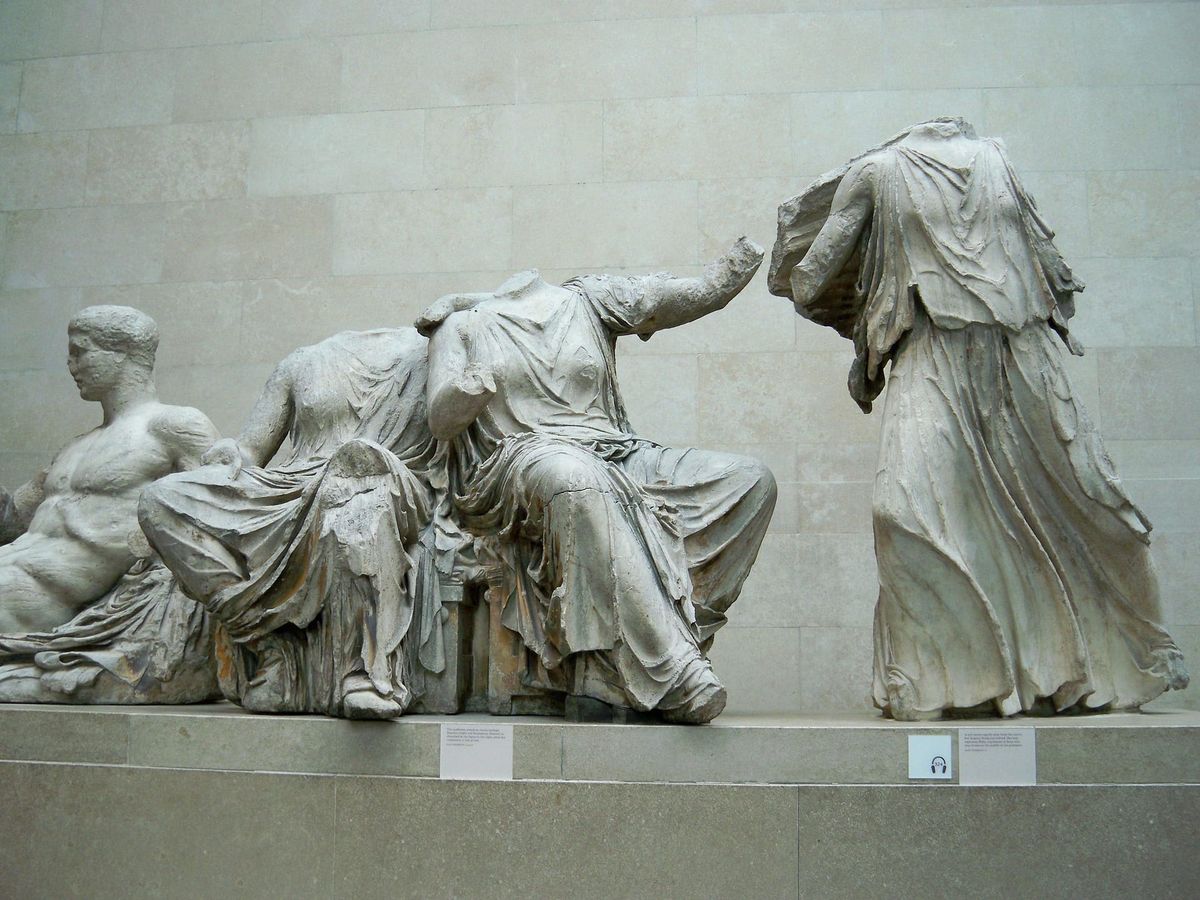
There is a scene near the end of the Iliad that I find myself returning to with some regularity, and that I think about more than almost any other passage in classical literature. Hector stands alone outside the walls of Troy. Achilles is approaching across the plain, and the Trojans have fled inside the gates, and Hector's aged father Priam looks down from the walls and begs his son to come inside, to live, to fight another day from behind the city's protection. His mother, Hecuba, joins the pleading. Every reasonable calculation available to a man in Hector's position argues for retreat. The war is going badly. The gods have made their preferences known. Achilles is the greatest warrior alive, and Hector, for all his genuine courage and his genuine gifts, is not Achilles and has never been Achilles, and standing his ground in the open field against this particular opponent is not bravery so much as it is a decision to die.
Hector knows all of this. He stands there long enough to feel it fully, long enough for Homer to give us access to his interior reasoning in one of the poem's great psychological passages, and what Hector thinks about, in that moment of extremity, is not whether he can win but whether he can live with himself if he does not try. He thinks about what the Trojans will say of him if he retreats. He thinks about Andromache. He thinks about the city he has been defending, not because victory seemed likely, but because someone had to defend it, and he was the man the city had produced for exactly this purpose, and that fact carried its own obligations regardless of what the outcome was going to be. And then Achilles comes within range and Hector runs, not from cowardice but from the sudden overwhelming physical reality of what he has decided to face; and then he stops running and turns, because running is not who he is, and he dies.
I have been thinking about George McGovern in connection with this scene for some time now, and the more carefully one examines the parallel the more it holds. McGovern was not, in the conventional political sense, a great man. He was a decent and serious and genuinely brave man, in ways that his political career consistently obscured rather than revealed, and he was a man who found himself, in 1972, standing outside the walls of a liberal tradition that was already under siege, facing an opponent whose reelection was, by any honest assessment of the political landscape, essentially certain. He ran anyway. He made his argument anyway. He was destroyed anyway, carrying Massachusetts and the District of Columbia against Nixon's forty-nine state landslide, and then he watched from his Senate seat as the things he had warned about came to pass with a specificity and a speed that history rarely provides to the vindicated prophet. Nixon resigned in disgrace less than two years later. The war that McGovern had built his campaign around ending continued for three more years, produced tens of thousands more American deaths, and concluded precisely as McGovern had said it would need to conclude. He had been right about everything that mattered, and the electorate had chosen not to listen, and the consequences of that choice were visited not upon the electorate but upon the Vietnamese and upon the young Americans who continued to die in a war that the president who had just won forty-nine states knew, according to his own private recordings, was unwinnable.
This is the Hectorian predicament in its purest modern American form: the man who sees clearly, who argues honestly, who fights with genuine courage, and who loses anyway, not because he was wrong but because the forces arrayed against him were simply larger than any individual heroism could overcome.
To understand why McGovern ended up in this position requires going back to the particular world that formed him, which is, in his case, a world that Americans have largely forgotten or never properly understood. George Stanley McGovern was born in 1922 in Avon, South Dakota, the son of a Methodist minister, a biographical detail that carries more weight than it might initially appear. The Methodist ministry in the rural Midwest of the early twentieth century was, like the Social Gospel tradition that shaped Walter Mondale's father in Minnesota, a vocation that understood Christianity as making demands upon the political and economic arrangements of society and not merely upon the private consciences of individuals. McGovern grew up in a family and a community shaped by genuine privation; South Dakota in the 1930s was among the hardest-hit regions in the entire country, the Dust Bowl combining with the Depression to produce conditions that stripped the landscape and the people who worked it down to something close to bare subsistence. This experience was not abstract to McGovern. It was the ground he stood on, and it produced in him a conviction about the obligations of government toward ordinary people that no subsequent political education ever dislodged.
What tends to be forgotten about McGovern, and what his opponents in 1972 worked very hard to ensure would be forgotten, is that he was a man of documented and exceptional physical courage long before he was a politician. He flew thirty-five combat missions over Europe as a B-24 bomber pilot during the Second World War, a number that speaks for itself to anyone familiar with the casualty rates associated with that particular assignment. The B-24 Liberator was a difficult aircraft to fly under the best conditions; flying it at altitude through antiaircraft fire and fighter opposition over heavily defended German and Italian targets was something rather different from the best conditions. McGovern's crew named their aircraft the Dakota Queen, after his home state and after his wife Eleanor, and McGovern brought it and his crew home from every mission he flew, including at least one emergency landing that, by the accounts of those present, required a level of skill and composure that his copilot later described as simply extraordinary. He was awarded the Distinguished Flying Cross for that landing.
I dwell on this because it matters enormously for understanding what was done to him in 1972, and because it illuminates something about the Hectorian parallel that I think is essential. Hector is not a coward. He is the bravest man in Troy, and the Iliad makes this point repeatedly and without ambiguity; his courage is not in question even in the moment when he briefly runs from Achilles, because Homer is careful to show us that the running is a momentary physical reaction to an overwhelming stimulus and not a reflection of his fundamental character. What is done to Hector, in the end, is that his genuine courage is made irrelevant by the superior force of his opponent. What was done to McGovern in 1972 was something different but structurally related: his genuine courage was made invisible by the political operation arrayed against him, and the man who had flown thirty-five combat missions over Europe was successfully portrayed, to millions of American voters, as the candidate of weakness and accommodation and retreat.
Nixon's reelection campaign, and the broader conservative political infrastructure that supported it, understood with considerable sophistication that the most effective way to defeat McGovern was not to engage his arguments directly but to caricature the constituency he represented. The imagery of the 1972 campaign associated McGovern, relentlessly and with deliberate dishonesty, with a counterculture that many Americans found genuinely alarming: with the most extreme expressions of the antiwar movement, with social disorder, with a liberalism that had supposedly lost its connection to the values and the concerns of ordinary working Americans. The Daley machine in Chicago had been excluded from the convention. The nomination process that produced McGovern had been reformed, after 1968, in ways that gave more weight to activists and less weight to the party regulars who had previously controlled the outcome. All of this was real, and all of it was exploited with a ruthlessness that Nixon's operation had been refining since at least 1966.
What tends to receive less attention is how thoroughly McGovern's actual record confounded the caricature being constructed around him. He was not a radical. He was a prairie progressive in the tradition of the upper Midwest, a man whose political formation owed more to the New Deal and the Social Gospel than to anything that emerged from the counterculture of the 1960s. His opposition to the Vietnam War was rooted not in the politics of protest but in a veteran's understanding of what war actually was and what it actually cost, and in a historian's assessment of how American involvement in Vietnam had developed and where it was going. He had served in the Kennedy administration as director of the Food for Peace program, an experience that deepened his conviction that American power could be used for genuinely constructive purposes if it was directed by people who understood what they were doing. He was, in short, a serious man making serious arguments, and the campaign against him was specifically designed to ensure that the seriousness would not be what voters saw.
The Democratic Party's own behavior during the 1972 campaign is a chapter that deserves more candid examination than it usually receives, because the party establishment's relationship to McGovern's candidacy was, to put it charitably, ambivalent in ways that significantly affected the outcome. Many of the prominent Democrats who might have been expected to campaign actively for their party's nominee did so with what can only be described as minimal enthusiasm. The labor leadership that had been a pillar of Democratic electoral coalitions for a generation was alienated by the convention reforms and by what it perceived as McGovern's insufficient deference to its institutional interests. Various figures associated with the Humphrey and Muskie wings of the party, having lost the nomination fight, did not exactly throw themselves into the general election effort with the energy the situation required. McGovern was, in a sense that Hector would have recognized, defending walls that some of the people inside those walls were not entirely committed to defending.
Then there was the Eagleton affair, which demands honest engagement because it is the episode that most directly cost McGovern whatever realistic chance he had, and because the lessons drawn from it by subsequent political professionals have been, I think, considerably simpler than the situation actually warrants. Thomas Eagleton, McGovern's chosen running mate, had a history of hospitalization for depression and had received electroconvulsive therapy, information that had not been disclosed during the vetting process, such as it was, and that became public shortly after the convention. McGovern's initial response was to declare himself a thousand percent behind Eagleton, a formulation that everyone understood, even as it was being spoken, to be less than fully persuasive. He then replaced Eagleton with Sargent Shriver, after an extended and publicly painful search for a replacement that itself demonstrated the thinness of the bench available to him.
The standard reading of this episode is that McGovern's handling of it revealed fatal indecisiveness and destroyed whatever credibility remained to his campaign. There is something to this reading, and it would be dishonest to dismiss it. But I think it elides something important about the actual situation McGovern was in. The replacement of Eagleton required McGovern to make a decision that was genuinely impossible to make well, under conditions of intense public scrutiny and with a party establishment that was not rallying behind him, about a problem that should not have existed but did exist, and to make it quickly enough to limit the damage while slowly enough to appear deliberate rather than panicked. That he handled it badly is not in serious dispute. That any other handling of it would have produced a significantly different electoral outcome is, given the overall landscape of the race, considerably less clear.
The war remained the essential context for everything. McGovern had organized his entire candidacy around the proposition that Vietnam was a moral catastrophe that required immediate and honest disengagement, and he was right, and the country, in November of 1972, chose not to act on his rightness. Nixon carried forty-nine states on the promise of peace with honor, a formulation that produced neither peace nor honor but that was considerably more palatable than what McGovern was offering, which was the acknowledgment that the war had been a mistake from its origins and that the most decent thing the United States could do was end it as quickly and as honestly as possible. The gap between what McGovern was saying and what the electorate was prepared to hear was not primarily a function of his campaign's tactical failures, though those were real; it was a function of the profound difficulty that democratic electorates have in acknowledging, in real time, that a significant national undertaking has been not merely unsuccessful but wrong.
The men who continued to die in Vietnam after November of 1972 died, in a sense, because the American electorate found McGovern's honesty harder to live with than Nixon's reassurance. This is not a comfortable thing to say, and I am aware that it will strike some readers as unfair to an electorate that was making decisions under conditions of incomplete information and genuine uncertainty. I say it anyway, because the alternative is to pretend that elections have no consequences, and that the people who make the choices that produce those consequences bear no relationship to the outcomes that follow. McGovern understood this, and I think it was among the heaviest things he carried in the decades after 1972.
He remained in the Senate until 1980, when he was defeated by a Republican in the Reagan wave that also ended the careers of several other prominent liberal senators. He had been targeted specifically by conservative organizations that understood, correctly, that his defeat would send a message about the political costs of liberalism, and he was defeated, and the message was sent. He went back to South Dakota, wrote and taught and remained engaged in public affairs, and in 1998 he published a book about his wartime experiences, a memoir of his missions over Europe that is among the more honest and least self-aggrandizing accounts of aerial combat I have encountered. It is the book of a man who understood what he had done and what it had cost the young men around him and who felt no need to make it grander than it was.
In 2001, he published a short book called The Essential America, which argued for a recovery of the New Deal tradition and a return to the idea of government as an instrument of the common good, and which was received politely and not read widely, because 2001 was not a moment when that argument was going to find a large audience. He supported Barack Obama in 2008 with genuine enthusiasm, and he lived long enough to see the Affordable Care Act pass, a piece of legislation that bore some relationship, however attenuated, to the kinds of things he had spent his career arguing for. He died in October of 2012, at the age of ninety, in the hospice in Sioux Falls where he had spent his final days.
The obituaries noted his 1972 campaign and his war record and his long Senate career and said the respectful things that obituaries say. What they did not quite capture, and what I want to try to capture here, is the particular quality of McGovern's relationship to his own defeat, which seems to me one of the more remarkable things about him. He was not bitter, or at least he did not allow bitterness to define him, which may amount to the same thing. He continued to believe, through the decades that followed 1972, that the arguments he had made were right, and history's subsequent developments gave him considerable grounds for that belief; and he continued to make those arguments, in various forms and venues, without the resentment that might reasonably have accompanied the knowledge that he had been right and had been punished for it.
This connects directly to what I find most Hectorian about him. Hector does not, in Homer's rendering, become cynical about the defense of Troy simply because the defense is going badly. He does not conclude that the walls are not worth defending because the gods have decided they will fall. He continues to do what a Trojan prince and the greatest warrior in Troy is supposed to do, not because he harbors illusions about the outcome but because his identity is inseparable from the role, and abandoning the role would require him to become someone he is not. McGovern continued to advocate for the things he believed in, continued to write and speak and engage, for forty years after his greatest defeat, because the alternative would have required him to conclude that the things he believed in were not worth the advocacy, and that was a conclusion he was constitutionally unable to reach.
The Hectorian parallel is worth examining with some care before I conclude, because I am aware that it carries implications I should address honestly. Hector loses. Troy falls. Everything he gave his life to defend is destroyed anyway: his son, Astyanax, is thrown from the walls, and his wife, Andromache, is taken into slavery, and his father, Priam, is killed at the altar of Zeus by Neoptolemus in one of the Iliad's most disturbing moments of deliberate impiety. The question the parallel raises about McGovern is whether the liberal tradition he spent his career defending has fared any better than Troy, and the honest answer is that the question is not fully settled but that the evidence is not entirely encouraging.
The America that McGovern imagined, the one he was defending in 1972 against forces he understood clearly and described accurately, has not come to be. The war ended badly, as he said it would. The political culture moved in the directions he warned against. The institutions he believed in have been under sustained pressure for decades. Whether they will hold, whether the tradition he represented will find its way back to anything like the influence it once had, is a question that history has not yet answered, and may not answer in the near term.
And yet I find myself unwilling to leave the parallel exactly there, because I think it misses something essential about what Homer is actually doing in the Iliad. Hector loses, and Troy falls, and all of that is true. But Hector is also, in the poem's moral economy, the figure whose integrity is most fully and most consistently demonstrated, the man whose love for his city and his family and his own sense of honor is presented without the ambivalence that attaches to almost every other major figure in the poem. Achilles is greater, but Achilles is also consumed by his own rage and his own grief in ways that make him a deeply solitary figure. Hector is less than Achilles in the categories the poem officially prizes, and he is more than Achilles in the categories that actually sustain a civilization. He is the man who knows what things are worth and acts accordingly, regardless of the outcome, and the poem asks us to honor that knowledge and that action even in the face of the outcome.
I think this is what McGovern deserves from history, and what he has not quite received. He was right about Vietnam. He was right about the consequences of allowing a president to wage war without honest accounting to the people that war served. He was right that the tradition of activist government he represented had genuine achievements worth defending and genuine arguments worth making. He made those arguments as honestly and as clearly as he could, in the face of a political operation that was specifically designed to prevent them from being heard, and he accepted his defeat without the bitterness that might reasonably have consumed a lesser man, and he continued to believe in and advocate for the things he believed in until he no longer had the capacity to do so.
That is not nothing. In the long accounting of American political life, it is a considerable amount. George McGovern stood outside the walls and did not run, or rather he ran briefly and then stopped and turned, because turning was who he was, and what came after was what it was going to be regardless. The walls fell in November of 1972. The question he embodied, about what this country owes its people and what its leaders owe the truth, has not yet been answered to anyone's satisfaction, and it will not be answered by forgetting the men who asked it most clearly and at the greatest personal cost.